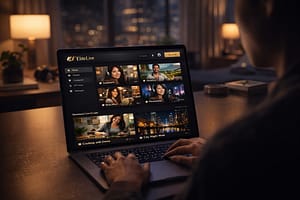


The idea that traditional jobs are the safest or most respectable option is losing some of its power. More women are looking at the structure of conventional work and asking whether it still deserves the loyalty it once demanded. When rigid schedules, low flexibility, and slow pay growth begin to feel less stable than they look on paper, flexible digital work starts to seem like more than a side option. It starts to feel like a serious alternative.
Time is one of the biggest reasons behind the shift. Traditional jobs often claim ownership over huge parts of the day, including the energy surrounding the job itself. Commutes, preparation, office routines, and recovery all take time, not just the official working hours. Flexible digital work changes that equation. It gives women more room to structure life around their actual priorities instead of shaping every priority around a fixed system.
That matters in ways that go far beyond convenience. A flexible schedule can make it easier to manage caregiving, pursue education, build side income, maintain health, or simply avoid the kind of burnout that grows in rigid environments. For many women, flexibility is not about working less. It is about working in a way that feels more compatible with real life.
There is also the issue of control. Traditional jobs can leave people feeling boxed in by management, office culture, and expectations they had little part in creating. Digital work often offers more control over workflow, presentation, boundaries, and growth strategy. That sense of ownership can dramatically change how work feels. Instead of adapting constantly to a structure built by someone else, many women are choosing paths where they have more say in the rules.
Income potential plays a role too. Flexible digital work can feel more attractive when conventional jobs offer limited upside. A person may be told to work hard, stay patient, and prove themselves, only to be rewarded with tiny increases and even less time for themselves. Digital paths can be unstable, but they can also be more responsive. Effort, experimentation, and audience building can produce visible financial movement much faster than many office environments allow.
Another part of the appeal is emotional realism. Many women are tired of pretending that office life is neutral simply because it is common. It can be draining, political, socially exhausting, and creatively narrow. Digital work comes with its own pressure, but for some women it feels like a better trade. The stress is different, and sometimes a different kind of stress is easier to accept when it comes with more freedom and more potential return.
Technology has made this shift easier to imagine. Platforms are smoother, payments are easier, remote tools are stronger, and audiences are more used to direct support. That changes the cultural legitimacy of digital work. It no longer looks like a fringe experiment in the way it once did. For many women, it looks like a realistic path with enough infrastructure behind it to take seriously.
There is also a values shift happening. More women are defining success in terms of autonomy, adaptability, and ownership rather than simply status within a formal workplace. That change matters because it affects what kind of work feels worth pursuing. If the goal is no longer just to fit into a system, then flexible digital work becomes attractive not only because it pays, but because it aligns with a different vision of life.
So why are more women choosing flexible digital work over traditional jobs? Because many are no longer convinced that conventional work offers enough freedom, enough upside, or enough respect for their time. Flexible digital work may be imperfect, but for a growing number of women it feels closer to the kind of independence they actually want.